
TÜV SÜD has invested more than £300,000 in its environmental testing facilities. The upgrade includes a third fast rate of change climatic test facility, a complete refurbishment of its drive-in climatic test chamber, and an increase in vibration testing capabilities.
Increase in TÜV SÜD’s climatic test capacity
The bespoke fast rate of change test chamber is the only one of its kind. It will increase TÜV SÜD’s climatic test capacity, reducing test waiting times and time to market for aerospace and defence equipment manufacturers. The chamber replicates rapid and extreme environmental temperature variations, covering a wide range of fluctuations from minus 70 °C to plus 120 °C, with rapid temperature change rates of up to 10°C per minute.
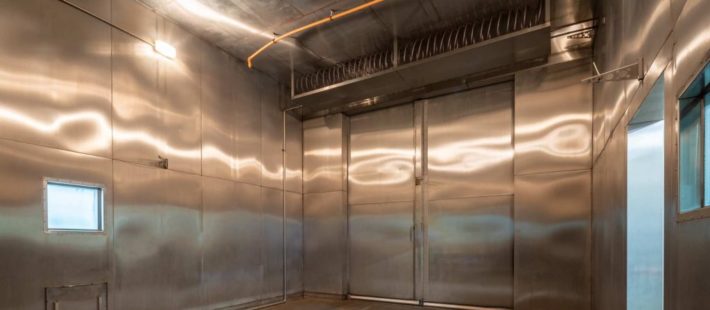
Part of TÜV SÜD’s investment also includes a complete refurbishment of its drive-in 120 m³ climatic test chamber, as part of its proactive upgrade and maintenance strategy to futureproof test services. One of the largest commercial drive-in test chambers in Europe, it can accommodate entire vehicles or substantial aerospace components and systems.
With the addition of new high-force and medium-force shakers, TÜV SÜD will be able to deliver vibration testing at higher levels, to better simulate real-world scenarios for shock, vibration and temperature. The increase in vibration testing capability will reduce substantially test lead times for manufacturers.
Benefits for manufacturers
Chris Bowles, Environmental Test Supervisor at TÜV SÜD, said: “Manufacturers are operating in a highly competitive market, but they must also adhere to complex standards to ensure the reliability and safety of their products. TÜV SÜD’s investment will help them to realise this, but they will also benefit from reduced test waiting times which will help them to achieve a rapid time to market. The new fast rate of change chamber is built to a bespoke design, following feedback from our engineers on the innovations that we could introduce to streamline the test process to help our customers. The new and upgraded chambers, alongside our improved vibration testing capacity, complement our already comprehensive selection of environmental and EMC services. Manufacturers can now access the full range of tests from a single location.”
More information: www.tuvsud.com
Source: Jec Composites – News