
October 2019: a quiet month for composites

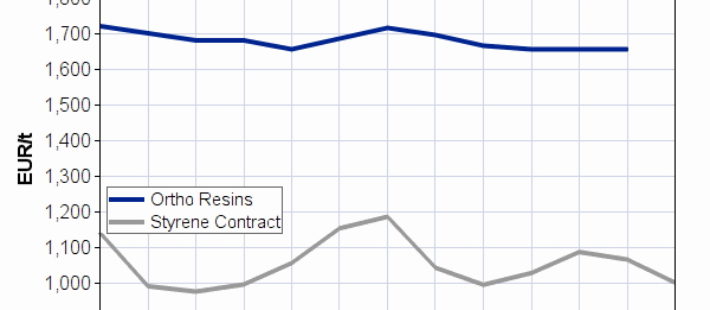
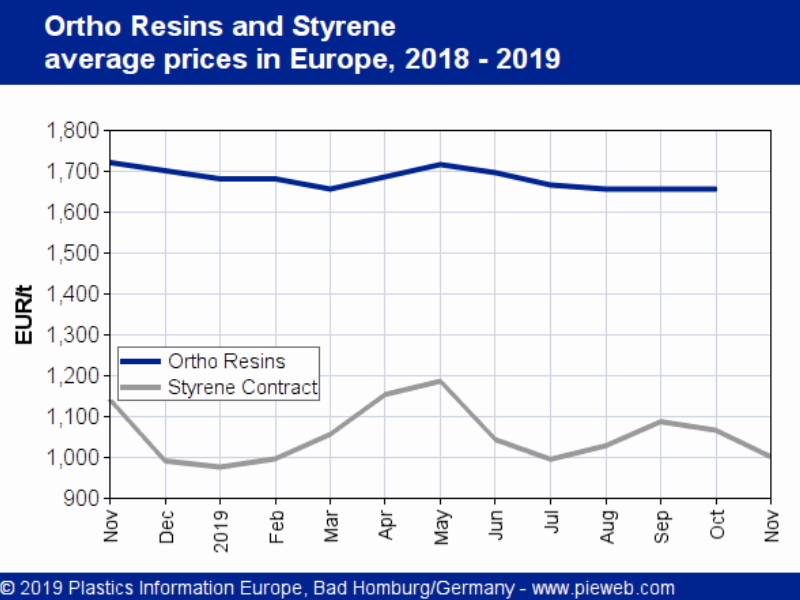
October was a quiet month for composites. Demand from most customers markets was below the seasonal average. Automotive could scarcely make any ground good, though the utility vehicle segment continued to order well.

With demand expected to remain soft and styrene pointing more sharply downward, resins prices will surely slip back in November, potentially by about half of the feedstock downswing – this especially as the slight decline in the October SM contract did not make much of an impact initially. Also, worth noting is that phthalic anhydride just barely remained stable. The Q4 contract for maleic anhydride had not yet been fixed at press time.

Glass fibre products likewise showed little momentum last month and look likely to move sideways up to the end of 2019. The markets are well supplied, and demand from the automotive industry undoubtedly will not budge before the Christmas and New Year holidays.

Source: EuCIA, Plastic Information Europe

Leggi anche

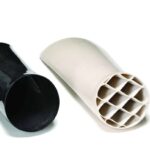
La crescente richiesta di componenti compositi necessita sempre più di soluzioni di produzione efficienti e convenienti. Massivit ha lanciato di recente l’unità 10000 e i suoi mandrini realizzati con produzione additiva, utili per formare componenti compositi cavi con superfici interne lisce e regolari. Nell’articolo vengono illustrati i vantaggi della stampa con materiale frangibile in acqua e i possibili risparmi economici….

Leggi tutto…

The European CIRCE project (Circular Economy Model for Carbon Fiber Prepregs), born from the collaboration of five Italian companies and financed under the LIFE program (LIFE ENV/IT/00155), has studied how to reuse the scraps of carbon fiber prepreg to produce structural components such as car parts, brake discs, toe caps for safety shoes and more….

Leggi tutto…

Il progetto europeo CIRCE (Circular Economy Model for Carbon Fibre Prepregs), nato dalla collaborazione di cinque aziende italiane e finanziato nell’ambito del programma LIFE (LIFE ENV/IT/00155), ha studiato come riutilizzare gli sfridi dei prepreg in fibra di carbonio per produrre componenti strutturali come parti auto, dischi freno, puntali per scarpe antinfortunistiche e non solo….

Leggi tutto…

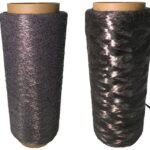
The use of CFRP can significantly reduce CO2 emissions in transportation, including airplanes and automobiles. However, a lot of CO2s is released during the production of CFRP, and most used and waste materials end up in landfills. With the growing market of CFRP, there is a strong demand for the development of recycling technologies. Toyota Industries have developed technology that aligns recycled carbon fibers from used CFRP into a uniform, consistent yarn, adapting its well-established cotton spinning methods to carbon fiber….

Leggi tutto…

Spherecube, una startup e spinoff dell’Università Politecnica delle Marche, propone di risolvere i problemi legati alla produzione tradizionale dei materiali compositi alto performanti, grazie ad un sistema brevettato di stampa 3D per compositi a base termoindurente e rinforzo continuo, che permette di ridurre gli scarti di produzione, di eliminare i materiali consumabili, di accorciare il tempo di curing e di azzerare gli sfridi di materiale….

Leggi tutto…