
Nasce a Bristol un materiale che permette l’autoriparazione


British scientists have created a breakthrough self-healing compound which could see aircraft wings, mobile phone screens and even nail polish repair itself.

The material is able to “heal” itself in a similar way to how human skin uses blood clots to stem bleeding.
It means chipped nails, broken tennis racquets, fishing rods, bike helmets and mobile phones could all repair themselves.
A team at the University of Bristol has spent three years working on the technology and are planning to take it to market “in the very near future”.

Cosmetics giant L’Oreal has already registered its interest in the product, which could revolutionise many areas of manufacturing.

Research leader Professor Duncan Wass said: “We’re definitely getting to the stage where in the next five or ten years we’re going to see things like mobile phone screens that can heal themselves if they crack.”

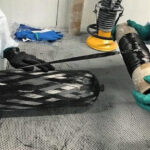
Their solution involves adding tiny, hollow microspheres to carbon fibre composite materials.

These break on impact, releasing a liquid healing agent which seeps into the cracks left by the damage.

It then comes into contact with a catalyst which triggers a rapid chemical reaction that causes the agent to harden.
Tests found that the material was just as strong after it had “healed” as it had been before the damage.

The healing material can take anywhere between a couple of hours and a day to recover – with warmer temperatures accelerating it and colder ones taking longer.


Photo’s 1 caption: British chemists have created a self-healing compound that could enable wings to heal themselves in a similar way to how human skin repairs itself. A close-up of microcapsules is shown.
Photo’s 2 caption: Bristol University scientists develop material which allow phone screens to repair themselves.


Leggi anche

La supply chain dell’Additive Manufacturing in scena dal 28 al 29 settembre 2023 nella cornice del Museo Alfa Romeo per la XI edizione del Convegno/Exhibition RM FORUM…

Leggi tutto…

In occasione dell’evento JEC Forum ITALY – organizzato da JEC Group in collaborazione con Assocompositi – del prossimo 6-7 giugno 2023 a Bologna, HP Composites terrà un intervento all’interno della sessione “Sostenibilita’ e circolarita’ dei materiali compositi”. Disponibile ora l’abstract dello speech….

Leggi tutto…

Grazie alle loro proprietà tecniche e al peso ridotto, i compositi vengono impiegati in quasi tutti i settori industriali e la plastica rinforzata con fibra di vetro (GFRP) costituisce la maggior parte di questo mercato. La necessità di sviluppare un processo economico per il riciclaggio dei rifiuti contenenti fibre pregiate ha spinto Longworth a lanciare EMPHASIZING, un programma di ricerca, finanziato da Innovate UK, che esplora la circolarità dei compositi in fibra di vetro….

Leggi tutto…

L’ossatura dei moduli di servizio dei satelliti realizzati nell’impianto di Torino di Thales Alenia Space richiede spesso l’impiego di strutture in materiali compositi che devono essere tagliati con estrema precisione. Qui entra in gioco Zund che ha fornito a Thales Alenia Space un sistema di taglio digitale automatico e altamente produttivo, in grado di lavorare un’ampia varietà di materiali, tra i quali spiccano i compositi…

Leggi tutto…

Il Ministero Federale per gli affari economici e l’azione per il clima, nell’ambito del programma “Rafforzare le dinamiche di trasformazione energetica nella regione del carbone e nelle località delle centrali elettriche”, ha stanziato quasi sei milioni di euro per sostenere l’Università tecnologica di Chemnitz nella creazione e nell’espansione della Carbon LabFactory, un’infrastruttura di ricerca per le fibre di carbonio ecologiche. …

Leggi tutto…